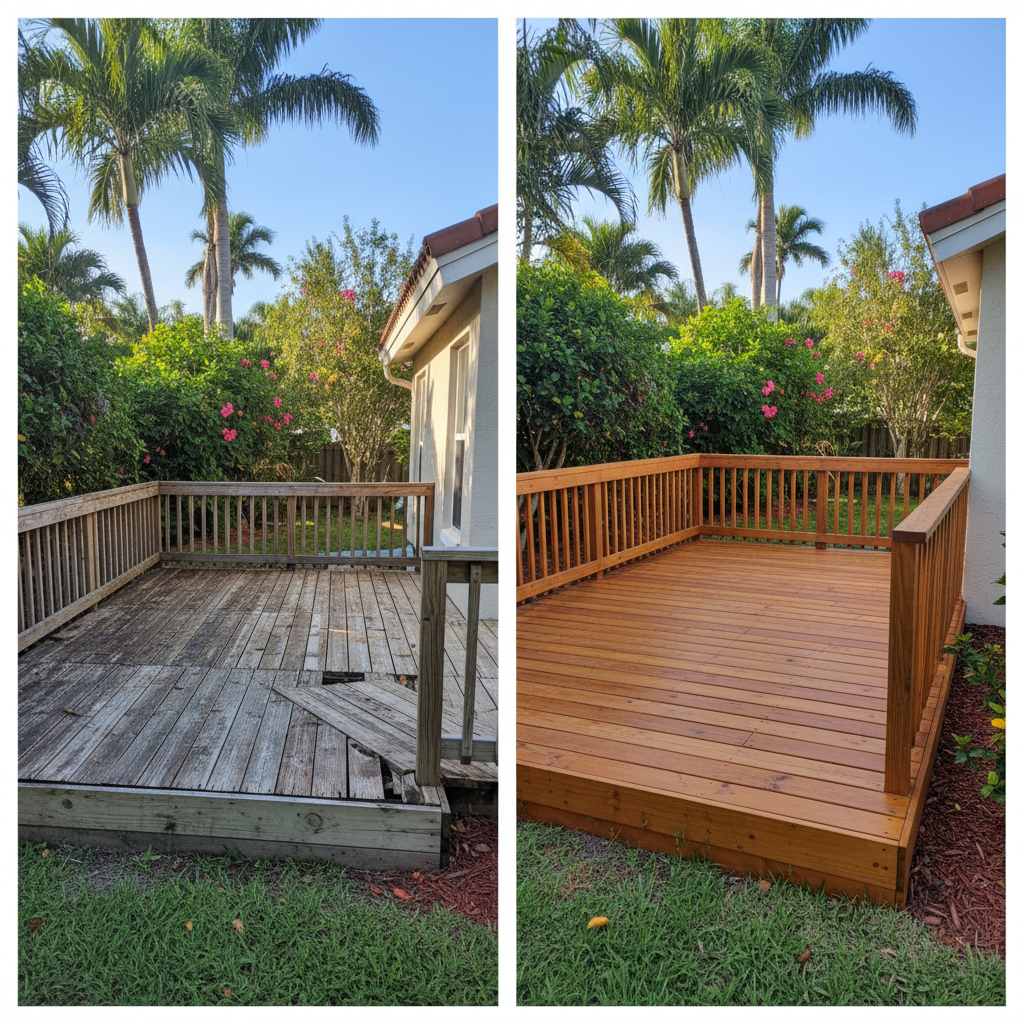
So, you're thinking about a new deck, huh? That's awesome. A good deck can really transform your outdoor living space, especially here in Coral Springs where we practically live outside year-round. But when it comes to picking the right material, especially for wood, it can get a little confusing. Today, I want to talk about two popular options I see a lot: pressure-treated pine and Ipe. They're both wood, but they're about as different as night and day when you look at the long haul.
Pressure-Treated Pine: The Workhorse of Decks
Let's start with pressure-treated (PT) pine. This is probably what most people think of when they hear 'wood deck.' It's everywhere, and for good reason. It's affordable, readily available, and pretty easy to work with. We've built countless decks with PT pine right here in Coral Springs, from those cozy backyards in Eagle Trace to bigger setups in Wyndham Lakes.
- Cost: This is where PT pine really shines. It's by far the most budget-friendly option upfront. You're going to pay a fraction of what you would for a premium hardwood. If you're on a tighter budget or you're planning to sell your home in a few years and don't need a 30-year deck, PT pine is a solid choice.
- Durability: It's treated to resist rot, decay, and insect infestation, which is crucial in our humid South Florida climate. That treatment helps it stand up to the elements better than untreated wood. However, it's still a softer wood. It can splinter, ding, and warp over time, especially with our intense sun and heavy rain cycles. You'll see some fading and graying if you don't keep up with maintenance.
- Maintenance: This is key. To keep PT pine looking good and lasting as long as possible, you absolutely need to clean it annually and re-seal or stain it every 2-3 years. If you skip this, it'll weather quickly, turn gray, and start to show its age. It's not a 'set it and forget it' material.
- Appearance: When new, it has that classic light green tint from the treatment, which fades to a honey brown, then eventually a silvery gray if left unstained. You can stain it almost any color you like, which offers a lot of flexibility.
Ipe: The Ironwood Powerhouse
Now, let's talk about Ipe (pronounced 'ee-pay'). This is a whole different animal. It's a tropical hardwood, often called 'Ironwood' because it's incredibly dense and durable. When we install an Ipe deck, we know it's going to be there for a very, very long time.
- Cost: Okay, let's not sugarcoat it: Ipe is expensive. It's a premium product, and you'll pay a significant premium for the material itself, and often for the installation too because it's so hard to work with. It's an investment, no doubt about it.
- Durability: This is where Ipe earns its keep. It's naturally resistant to rot, decay, insects, and even fire. It's so dense it barely absorbs water, making it incredibly stable and resistant to warping, splitting, and splintering. It's also extremely hard, so it stands up to heavy foot traffic and furniture without a problem. I've seen Ipe decks in Florida that are 20+ years old and still look fantastic. It handles our humidity, our sun, and even those occasional tropical storms like a champ.
- Maintenance: Here's the good news: Ipe is low maintenance. If you want to keep its rich, dark brown color, you'll need to apply a UV-inhibiting oil once a year or every other year. If you don't mind it weathering to a beautiful silvery-gray patina, you can literally do nothing but clean it occasionally. It won't lose its structural integrity; it'll just change color.
- Appearance: Ipe has a gorgeous, rich reddish-brown color when new, with a fine grain that looks incredibly luxurious. It really elevates the look of any home. If you let it weather, it develops a sophisticated silver-gray tone, much like aged teak.
Which One Should You Choose for Coral Springs?
Alright, so what's the verdict for your Coral Springs home? It really boils down to your budget, your aesthetic preference, and how much maintenance you're willing to do.
If you're looking for the most affordable option upfront, and you're prepared to commit to regular cleaning and re-staining every couple of years, then pressure-treated pine is a perfectly good choice. It'll give you a functional, attractive deck that can last 10-15 years or more with proper care. It's a great value.
However, if your budget allows for it, and you want a deck that will truly last a lifetime with minimal fuss, a deck that will look stunning and add significant value to your home, then Ipe is the superior choice for our South Florida climate. Its natural resistance to everything our weather throws at it, combined with its incredible density, makes it an almost bulletproof option. You'll pay more upfront, but you'll save on maintenance and replacement costs down the line, and you'll have a deck that stands out.
Think about the long game. Sometimes, paying a bit more now saves you a lot more later. Either way, making sure it's built right is half the battle. That's where Pacific Deck Company comes in. We're happy to talk through your options and help you figure out what makes the most sense for your specific situation.